

Have you ever felt frustrated after discovering you paid too much in taxes or fees? You want to keep more of your money. Cost Control starts with tracking your expenses and watching for tax law changes. > Smart habits help you save more. Let’s walk through steps you can use.
Key Takeaways
Check your spending often so you do not get surprised. This helps you find costs that can lower your profits.
Learn about new tax law changes to save money. You can use new deductions and credits to pay less tax.
Put your expenses in the right groups to avoid fines. This also helps you get the most deductions.
Tax and Fee Overview
Common Taxes and Fees
Every year, you pay many taxes and fees. Some are easy to see, like income tax, sales tax, and payroll tax. Others are harder to notice, like business license fees, property taxes, and local permits. If you own a small business, you also pay franchise taxes, excise taxes, and sometimes environmental fees.
Here is a list you might know:
Income tax
Sales tax
Payroll tax
Franchise tax
Property tax
Excise tax
Permit and license fees
You might miss some if you do not check your statements often. Keeping track helps you avoid surprises and helps with Cost Control.
Recent Tax Law Changes
Tax laws change a lot. You need to know what is new so you do not pay too much.
Look at this table to see how new rules affect small businesses:
Tax Law Change | Impact on Small Businesses |
|---|---|
New deductions for tip income and overtime pay | Lowers taxable income, which can lower taxes for service businesses. |
Modifications to interest expense deductions | May limit what you can deduct, so taxes can change at the federal and state level. |
Restoration of immediate expensing for R&E costs | Gives fast tax relief for some spending, but states may have different rules. |
Changes to SALT deduction ceilings | Affects state tax planning, especially for businesses using pass-through entity tax rules. |
If you keep up with changes, you can change your plans and save money.
Hidden and Overlooked Costs
Some costs are hard to see. You might not notice them, but they add up quickly.
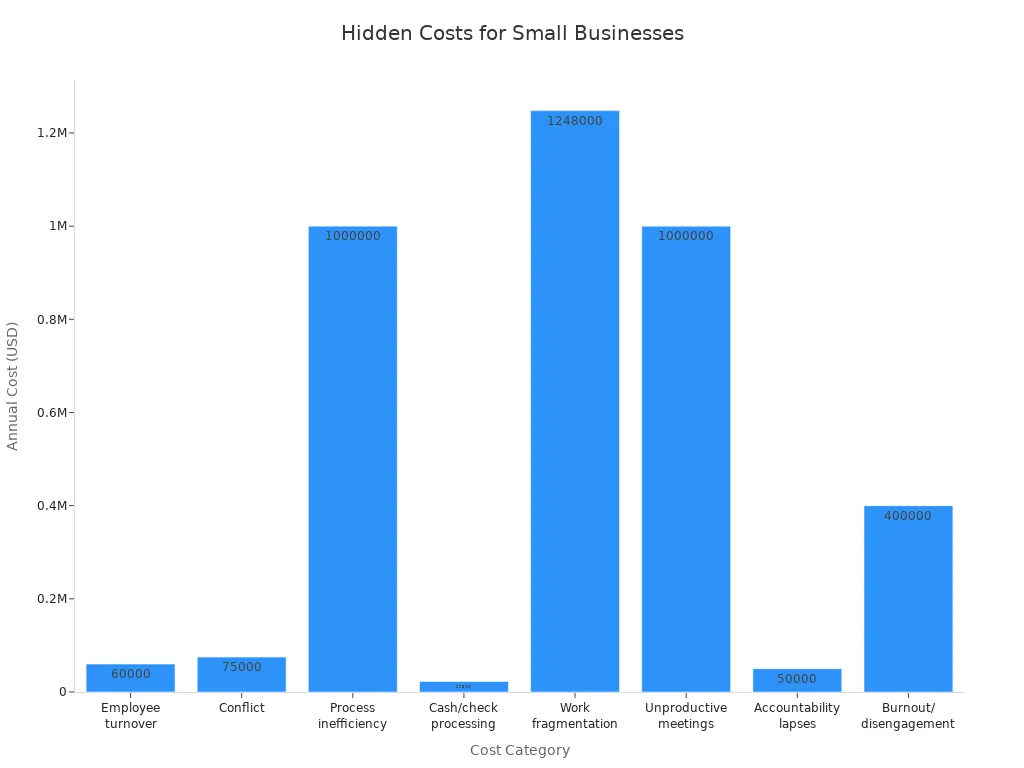
Today, it costs more to run a business. Vendor fees go up a little every year. Many businesses miss these hidden costs because they are not easy to find.
Here is a chart that shows how much these hidden costs can hurt your profits:
Watch out for these common hidden costs:
Merchant services
Telecom and data plans
Fuel expenses
Subscriptions and SaaS programs
Software add-ons and integrations
Waste management
Shipping
Insurance
Technology bundles
International transaction fees
If you find these costs early, you can fix them and improve Cost Control.
Cost Control Strategies
Deductions and Credits
You can pay less tax by using deductions and credits. Deductions make your taxable income smaller. Credits lower your tax bill right away. Many small businesses miss these savings. They do not know what they can claim. Here is a table with some good deductions you can use:
Deduction Type | Description |
|---|---|
Qualified Business Income (QBI) | Lets you deduct up to 20% of your qualified business income if you run a pass-through entity. |
Cost of Goods Sold (COGS) | Covers direct costs of items you sell, which lowers your gross profit. |
Business Travel Expenses | Includes flights, hotels, and transportation for business trips. |
Business Meals | Lets you deduct meals for employees or clients, but you need good records. |
Startup Expenses | Allows up to $5,000 in qualifying start-up costs in your first year, with some limits. |
Tip: Always save your receipts and records for every deduction. The IRS might ask you to show proof.
Tax credits work in another way. They take money off your tax bill dollar-for-dollar. Some credits even give you money back if your tax bill goes below zero. Here are some credits that help small businesses:
Residential Clean Energy Credit helps pay for solar or geothermal systems.
Electric Vehicle (EV) Credit gives up to $7,500 for new EVs if you follow the rules.
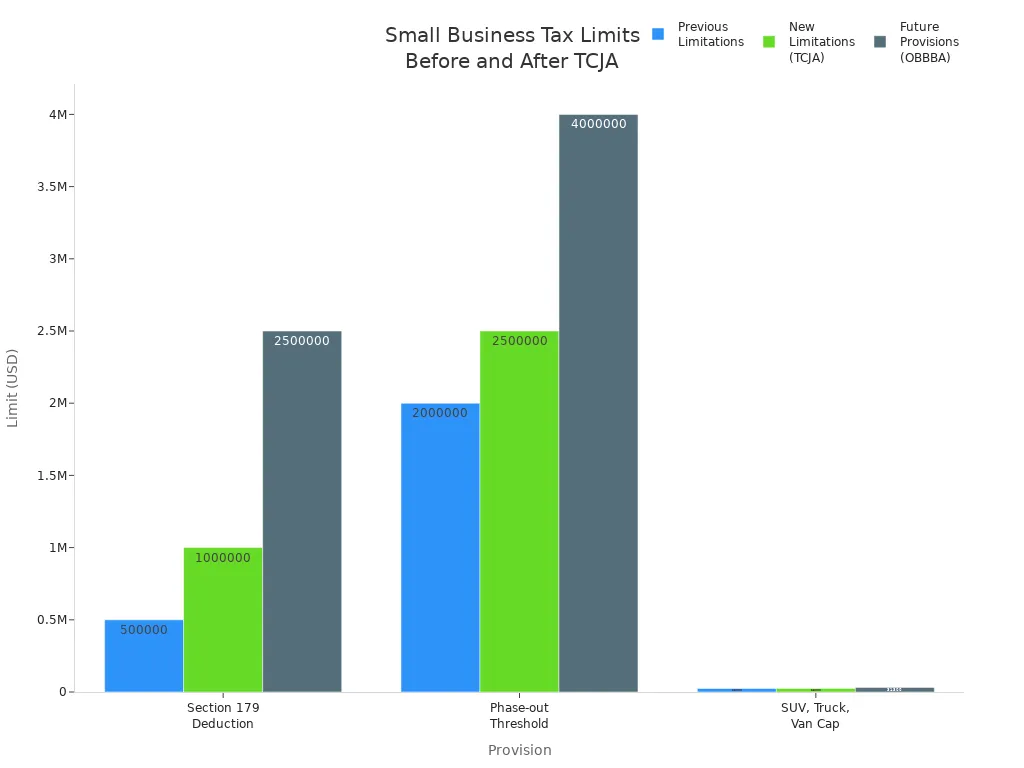
The 2017 Tax Cuts and Jobs Act changed things for small businesses. Now you get bigger limits for Section 179 deductions and bonus depreciation. Look at this table to see what changed:
Provision | Previous Limitations | New Limitations (TCJA) | Future Provisions (OBBBA) |
|---|---|---|---|
Section 179 Deduction Limit | $500,000 | $1,000,000 | $2,500,000 (after 2024) |
Phase-out Threshold | $2,000,000 | $2,500,000 | $4,000,000 (after 2024) |
SUV, Truck, Van Cap | $25,000 | $25,000 | $31,300 (for 2025) |
Bonus Depreciation | N/A | Automatic for qualifying assets | N/A |
Check your expenses often. This helps you find new deductions and credits. Doing this helps you control costs and keeps your business ready for tax changes.
Expense Classification
Classifying expenses the right way helps you save money. It also keeps you out of trouble. You must separate business costs from personal ones. Mixing them up can make you pay more taxes or get penalties. Here are some best ways to classify expenses:
Track your income and expenses every month.
Learn about different tax categories and business types.
Use tax software to organize expenses and find more deductions.
List home office costs, training, travel, and meals as business expenses if they qualify.
Note: Always keep good records. The IRS says you should save tax documents for at least three years. Sometimes you need to keep them longer. Digital storage makes it easy to organize receipts and statements.
Follow these steps to make sure your expenses are classified right:
Check your financial records before you file taxes.
Put every expense in the correct category.
Save receipts and keep personal costs apart from business ones.
If you misclassify workers or expenses, it can hurt your business. You might owe back taxes or get fines for unpaid overtime and benefits. These mistakes add up fast and can hurt your business health. Cost control starts with careful expense classification.
Negotiating Fees
You pay fees for banking, credit card processing, and other services. These costs can sneak up on you. You can lower them if you know how to negotiate. Try these ideas:
Ask your processor or bank for better rates.
Look for deals from other providers.
Use Level 2 or Level 3 data for B2B payments to get lower interchange rates.
Skip extras you do not need or bundle services to save money.
Set up Cash Discount Programs or Dual Pricing Models.
Encourage customers to use cheaper payment methods.
Make sure you follow PCI rules to avoid extra charges.
Pro Tip: Check your statements often. You may find fees you can cut or negotiate.
PT5 Global gives you a smart way to manage sourcing and fees. You get clear pricing, so you always know what you pay. There is no minimum order quantity, which helps any size business. PT5 Global also has a special VAT rebate system. You get back 80% of China’s export tax rebate, which lowers your costs. Their way removes hidden fees and helps cost control for all businesses.
Cost control means you need to watch your fees. Negotiate when you can. Use services that help you save. PT5 Global gives you tools to manage expenses and save more.
Expense Tracking and Organization

Monthly Check-Ins
You want to keep up with your money. Checking every month helps you find problems early. Try this easy routine:
Look at your income and spending each month.
Check your cash flow for any surprises.
Find places where you need to change things.
Save some money for emergencies.
Make plans for flexible ways to get money.
This habit keeps your business strong. You can fix things fast and feel less worried when it’s time to pay taxes.
Digital Tools
Digital tools help you track expenses better. You can use accounting software or apps to keep records neat. Here’s how these tools help:
Benefit | Description |
|---|---|
Improving standardization | Doing the same monthly check helps you spot small problems. |
Real-Time Data Capture | Apps record expenses right away and sort them for you. |
Automated Bank Reconciliation | Software matches transactions and saves you time. |
Integration Across Systems | Programs work together, so you don’t enter data twice. |
You save time and make fewer mistakes. Digital tools help Cost Control by keeping your records clear and simple.
Backup Systems
It is important to protect your financial records. You never know when something bad might happen. Good backup systems keep your data safe. Here’s what to look for:
Feature | Description |
|---|---|
Instant Recovery | Get your data back fast from the cloud or on-site. |
Immutability | Backups cannot be changed or deleted by hackers. |
Automated Monitoring | Dashboards warn you about problems and watch your backups. |
Comprehensive Recovery Strategies | Restore your data to any system, even if your main one is gone. |
App-aware Restores | Get data back for apps like SQL, Oracle, or Salesforce easily. |
Cost Efficiency | Store backups cheaply and keep them as long as needed. |
Cyber resilience means you use security and backups together.
Encrypted copying and monitoring keep your data safe.
Fast recovery helps you get back to work quickly.
Tracking often, using smart tools, and having strong backups help you stay organized and ready for anything.
Compliance and Best Practices
Recordkeeping
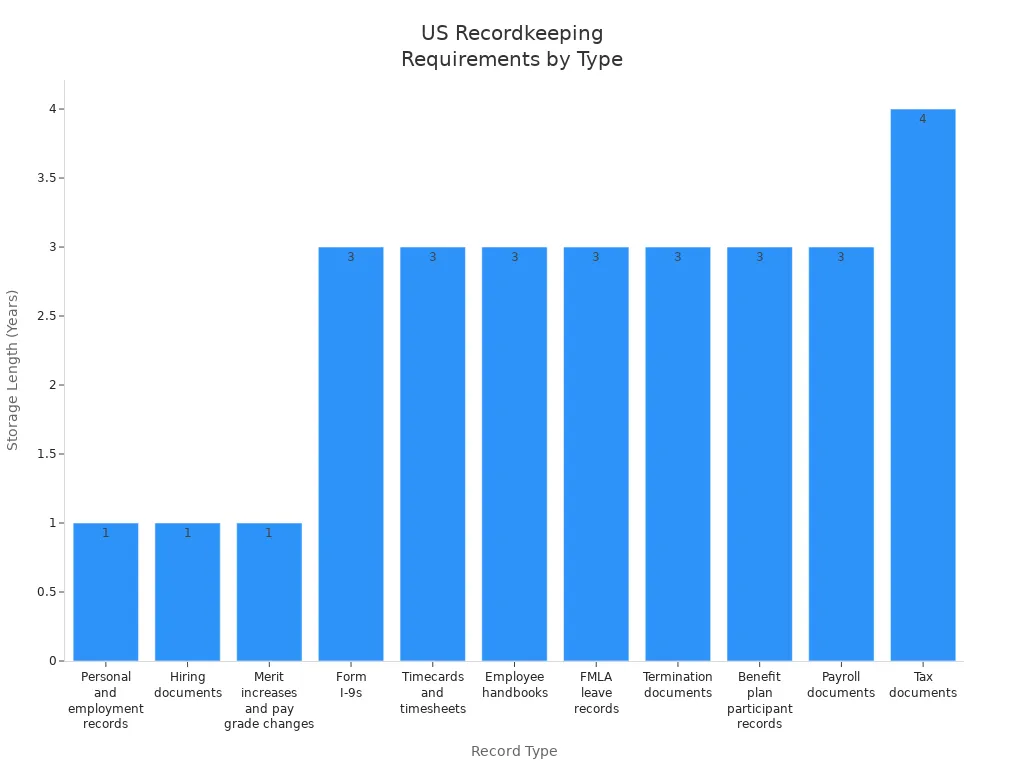
You need to keep good records to avoid trouble. Good records show what you earn and spend. The IRS says keep tax papers for three years. If you own rental property, keep those records for seven years. Some records, like retirement plans, must be saved forever. Here’s a chart that shows how long to keep different records:
Record type | Storage length requirement |
|---|---|
Personal and employment records | 1 year |
Form I-9s | 3 years |
Payroll documents | 3 years |
Tax documents | 4 years |
Active retirement plans | Indefinitely |
You should also save things like your EIN, wage reports, tip amounts, and employee benefits. If you get audited, neat records make it easier and less scary.
Regulatory Updates
Tax rules change a lot. You need to know the new rules so you don’t pay extra fees. Last year, the IRS and Treasury made the Priority Guidance Plan. It covers things like the One Big Beautiful Bill Act, tribal tax issues, and digital assets. There are new rules for corporate stock buybacks too. You can sign up for IRS updates or use the Knowledge Center for news. These updates help you avoid mistakes and keep your business safe.
Resource | Purpose |
|---|---|
Knowledge Center | Latest insights on tax compliance and government reporting |
NTSA Week Video Script | Tips to protect your business from scams |
Professional Advice
Getting help from a tax expert or CPA saves you money and stress. They know how to find deductions and credits you might miss. They help you plan ahead and keep your filings correct. Here are some reasons to work with a pro:
Tax strategies that fit your goals
Planning ahead to lower risks
Team support for smart choices
Benefit | Description |
|---|---|
Accurate and compliant tax filing | Your returns follow the law |
Reduced risk of IRS audits | Less chance of getting audited |
Identification of deductions and credits | More savings through smart tax moves |
Support with payroll and bookkeeping | Help with financial records |
Strategic tax planning | Long-term strategies to lower taxes |
When you follow the rules and get expert help, you lower your audit risk and save more money. Cost Control works best when you keep good records, stay updated, and ask for help when you need it.
You can keep costs low by watching your spending. Make sure you follow the rules and learn about new tax laws. Checking your money often helps you catch mistakes. Good planning helps you save more.
Watch for tax law changes so you follow the rules. This helps you avoid fines.
Get help from experts for smart tax planning and audits.
Resource/Service | Description |
|---|---|
CCH® ProSystem fx® Tax | Tax software that teaches you how to use it. |
PT5 Global Sourcing Management | You save money with clear prices for sourcing and fees. |
FAQ
How can you lower your taxes and fees quickly?
You can track your expenses, claim all possible deductions, and check for new tax credits. Review your statements every month to catch hidden costs.
What makes PT5 Global’s Sourcing Management Services different?
You get zero minimum order requirements, clear pricing, and an 80% VAT rebate. PT5 Global helps you save money and avoid hidden fees.